Sand Hollow Fishing Report: Bass Conditions, Water Temps & Best Lures
A current Sand Hollow bass report for August 11, 2026, with the latest ramp and water-level update, a practical temperature-based lure plan, and a clear stocking-data caveat.
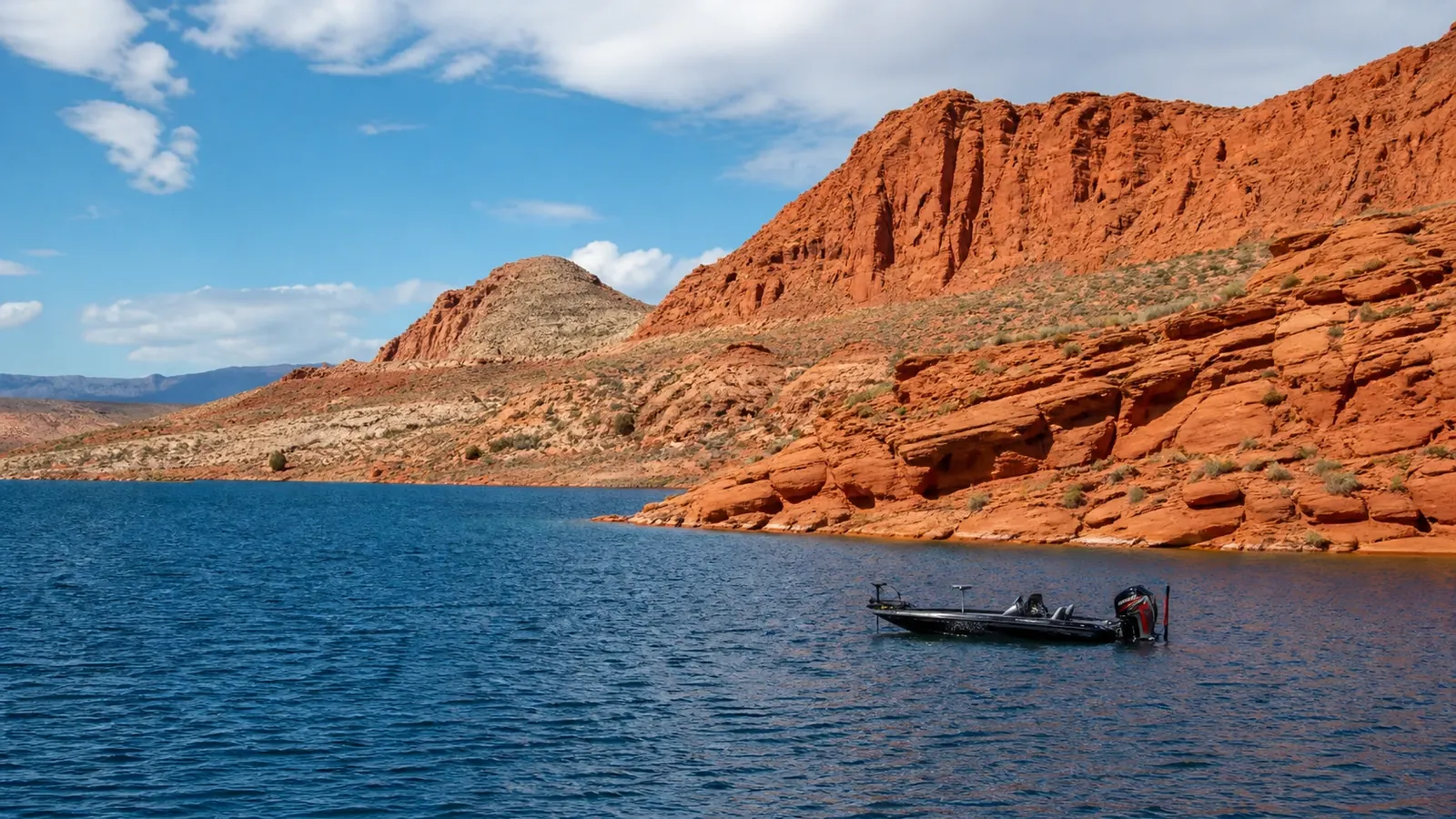
Sand Hollow is the most bass-forward stop in this queue, but current reports need a clean separation between verified access facts and angler inference. I checked the official park page and the DWR stocking table on August 11, 2026. The latest posted park update is July 27; it reports a 76% water level, no ice, and good launching at the main ramp. It does not publish a current surface temperature.
Sand Hollow conditions at a glance
| Signal | Latest verified detail | How to use it | | --- | --- | --- | | Water level | 76% | Expect shoreline contours to differ from a full pool; look for rock, points, and shade. | | Main ramp | Open; launching conditions good | Confirm decontamination hours and wind before towing. | | Ice | None reported | This is an open-water summer report. | | Surface temperature | Not posted on the current park page | Take your own reading; do not substitute a generic forecast for water temperature. | | DWR stocking check | No 2026 Sand Hollow row found in this table check | No stocking claim is being made from the absence of a row. |
The official Sand Hollow current conditions page is the page to recheck before the drive. It also flags harmful-algae information and says the park has a summer decontamination schedule. The internal Sand Hollow Reservoir guide can fill in species and access context without replacing the current park notice.
A temperature-based bass plan
Because no live surface temperature was posted, use the water in front of you to choose a presentation:
- Cooler dawn or shaded water: Start with a walking bait, popper, or small swimbait around shallow rock and the first break. Keep the retrieve deliberate and leave pauses.
- Mild, moving water: Cover water with a spinnerbait, vibrating jig, or compact crankbait. Wind on a rocky bank is a better reason to move than a calendar date.
- Warm, bright water: Slow down with a Texas-rigged worm, creature bait, or shaky head along rock, shade, and the deeper side of a point. Let the lure settle before moving it.
These are proven starting categories, not a claim that a specific Sand Hollow angler caught fish on a specific lure today. Log the temperature, depth, clarity, wind, and the lure that produces contact so the next move is informed.
Where to look
At a 76% level, prioritize visible rock, points, cuts, and any shade line that gives bass a short route between cover and deeper water. A broad empty bank is a poor place to spend an hour. Make a short fan of casts, change angle, and move if the bank gives you no depth or cover.
Boat anglers can use the main ramp, but the park's launching note is not a guarantee about every day or every trailer. Shallow water, crosswind, and algae notices can change the practical decision. If you are unsure, keep a shore plan ready and check the Utah State Parks boat-ramp conditions page before leaving.
Trout and drought context
Sand Hollow is also part of the broader southern Utah trout and warmwater conversation. DWR's drought-year fishing guidance explains that low water can warm more quickly, reduce oxygen, and increase stress on trout. That is a reason to handle trout carefully, avoid unnecessary warm-water fights, and choose cooler periods if trout are your target. It is not a current Sand Hollow temperature measurement.
Anyone launching should complete the annual DWR mussel-aware course and boating steps. The park page says spearfishing is not allowed at Sand Hollow. Read the 2026 fishing guidebook for the complete rules before fishing.
A field plan when the temperature is unknown
Carry two moving options and two slower options. Use the first moving lure to locate active bass around rock, points, and wind. Use the second to change vibration or profile without changing the whole presentation. If the sun climbs and the bank goes quiet, move to a slower soft plastic and count the lure down in the same area. The goal is to learn whether fish are shallow, suspended, or holding tight to cover.
Take a temperature reading at the launch, then take another reading after you move to a different cove or depth. A single number at the ramp can hide a meaningful difference between windblown water, a shaded bank, and a protected pocket. Write the reading next to the lure, depth, clarity, and time. That turns the next visit into a comparison instead of another guess.
Shore and boat expectations
From shore, prioritize banks that give you access to a drop or a point rather than casting across a featureless beach. Keep a pair of shoes with good traction because low water can expose loose rock. From a boat, do not assume the middle of the reservoir is automatically the best water; use the graph, wind, and visible structure to pick a repeatable route. The current 76% level is useful context, but it does not tell you the depth of a particular point.
If an algae notice changes during the trip, follow the posted health direction and avoid contact with suspicious water. If wind makes the main basin unsafe for your boat, switch to a protected shore plan or leave. A successful report should include the decision to stop when conditions are wrong, not just a lure list.
Before the first cast, confirm the license, water-specific rules, decontamination requirement, and the status of the ramp you intend to use. Carry water and sun protection, keep a landing net handy, and avoid handling trout in the warmest part of the day when possible. Sand Hollow rewards preparation because the visual landscape is easy to read while the underwater pattern is not.
For a regional comparison, use the Southern Utah fishing report, the Fish Utah stocking report, and the internal Sand Hollow waterbody guide.
FAQ
What is the current Sand Hollow water temperature?
The latest park page I verified does not publish a surface temperature. Bring a thermometer or use your electronics, and record the reading at the depth you are fishing.
Is the Sand Hollow boat ramp open?
The July 27 State Parks update reports the main ramp open with good launching conditions. Check the current park page and ramp notice before travel because wind, water level, and decontamination operations can change.
What lures should I start with at Sand Hollow?
Start with a topwater or moving lure in low light or wind, then use a Texas-rigged worm, creature bait, or shaky head around rock and depth as the sun rises.

Get free email updates
Get Utah stocking updates, trip-planning links and gear notes by email. Email signup is separate from paid SMS/voice plans, app subscriptions and the Fishing Playbook PDF.
Unsubscribe from email updates at any time. Read our website privacy policy.
Related Articles
 Illustration
Jordanelle Reservoir Fishing Report: Current Conditions, Best Baits & Where Fish Are Biting
A dated Jordanelle snapshot for August 11, 2026: open water, a 70 F surface reading, ramp notes, recent DWR stocking records, and a practical trout plan for shore and boat anglers.
 Illustration
Willard Bay Fishing Report: Walleye, Wiper & Perch Conditions
The August 11, 2026 Willard Bay snapshot covers open-water access, low water, the latest posted temperature, recent wiper stocking, and practical walleye and perch starting patterns.
 Illustration
Utah Ice Fishing Report: Current Ice Conditions by Reservoir
A season-aware Utah ice report for August 11, 2026: current open-water status, what is not known about future ice, and a safety-first checklist for the next freeze.
More Utah Fishing Updates
Browse more regulation changes, local reports, and seasonal how-to guides.
Back to all articles