Tibble Fork Reservoir Fishing: Recent Stocking, Trout & Current Conditions
A Tibble Fork Reservoir report for August 11, 2026, built around the latest August 4 rainbow stocking, mountain-road access, and a simple plan for recently stocked trout.
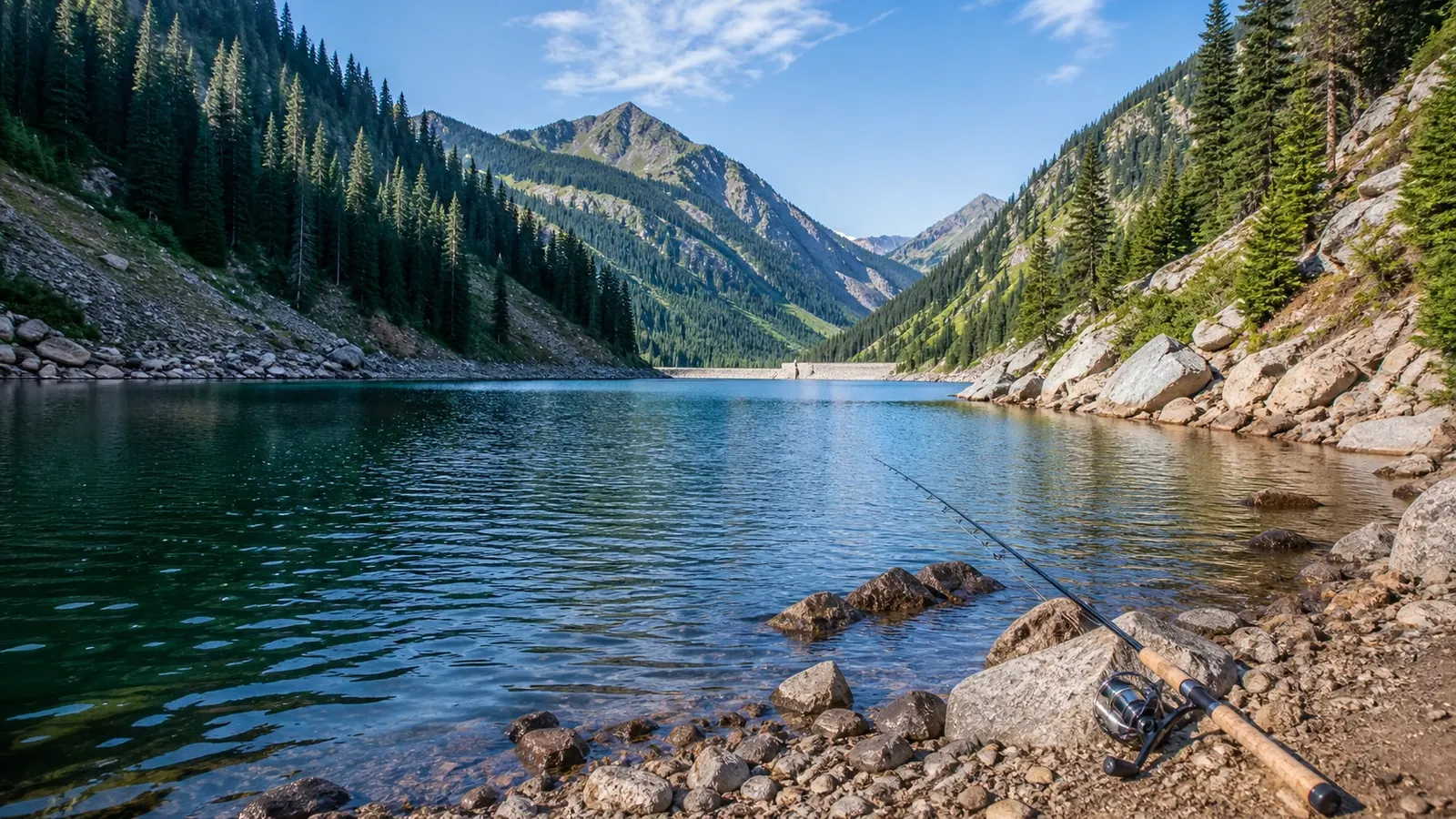
Tibble Fork is a compact mountain-reservoir trip where a recent stocking row can make the first decision easier, but not eliminate the need to move. I checked the official DWR stocking table and current road information on August 11, 2026. No current surface temperature was posted in the sources used for this report, so do not borrow a number from a nearby lake.
Latest Tibble Fork stocking and access
| Signal | Latest verified detail | Practical response | | --- | --- | --- | | Latest DWR row | Aug. 4: 1,001 rainbow at 11.93 inches | Use light trout tackle and a mobile shoreline plan. | | Prior release | July 13: 1,201 rainbow at 11.22 inches | Repeated releases support a catchable-trout starting point, not a guaranteed bite. | | Earlier pattern | June 2, June 11, and June 29 rainbow rows | Fish may have dispersed from the most obvious access point. | | Road | UDOT reported SR-92 reopened May 22 for 2026 | Check current canyon road status before leaving. | | Fire closure history | A July 10 Timp Fire temporarily closed Tibble Fork for firefighting operations | Do not infer current access from the stocking table or the seasonal reopening alone. |
The DWR stocking database supplies the fish records. UDOT's seasonal-road announcement covers SR-92, and the Forest Service recreation information includes Tibble Fork access context. The internal Tibble Fork Reservoir guide is a useful trip-planning companion.
Access needs an extra warning this season. A July 10 Timp Fire report documented a temporary Tibble Fork closure for firefighting operations. Later reporting said the fire was contained, but this article does not infer today's access from that event. Check current Uinta-Wasatch-Cache alerts and UDOT traffic information immediately before travel.
A simple recently stocked trout plan
Start with a light or ultralight spinning rod and 4- to 8-pound line. Use a small inline spinner, spoon, or other legal artificial lure and cover several shoreline angles. Cast beyond the first shallow shelf, count the lure down consistently, and record where you get a follow or strike. If the first bank is blank after 20 to 30 minutes, move rather than making the same cast with a different color.
If bait is legal under the current Utah fishing guidebook, use a small hook and a modest floating presentation on a sliding sinker. The recent fish average roughly 11 to 12 inches, so oversized bait and heavy line are usually unnecessary. Keep the hook point exposed and release trout quickly if you are not keeping them.
The canyon gives you useful structure: rocky banks, shade, points, and transitions between shallow gravel and darker depth. Start near a change rather than the most crowded flat. Wind can make casting harder but can also create a food lane along one bank; let the conditions choose the side of the reservoir you test first.
What the stocking record cannot tell you
DWR records tell you the species, date, count, and average size of a release. They do not tell you whether fish moved after release, whether a current parking area is full, whether the road is clear, or whether the fish are feeding on the presentation you brought. Treat the August 4 row as a strong reason to carry trout gear, not as a live fishing report.
No current water temperature is claimed here. Use an on-site reading, the shade line, and fish behavior to decide whether to stay shallow or search deeper. If the weather turns, leave the canyon rather than stretching a fishing day into a road-safety problem.
Rotate the shoreline with purpose
Give a bank a short, repeatable test. Make several casts parallel to shore, several across the first break, and several toward a point or inlet. Count the lure down the same amount on each pass. If you get no contact, move 50 to 100 yards or switch to a different feature instead of changing through every color. Recently stocked rainbows often make a small lure productive, but they can also spread quickly after release or avoid busy shoreline activity.
Keep a legal bait setup as a backup only after checking the guidebook and posted rules. Use light line, a small hook, and enough weight to hold bottom without burying the presentation in rocks. Bring a net and forceps so a stocked trout can be released quickly. If the day is warm, avoid extended photos and reduce the time the fish spends in the air.
Because American Fork Canyon can draw swimmers, paddlers, hikers, and anglers at the same time, choose casting lanes carefully. Give non-anglers room, keep hooks controlled while walking, and never fish a closed area. If parking, road, fire, or weather notices change, a current agency alert outranks an August 4 stocking row.
For additional preparation, compare the rainbow trout species guide, the stocking report, and the recently stocked shore plan.
The most useful Tibble Fork report you can make is specific: date, access point, water clarity, depth, lure size, and whether the fish were newly stocked or already conditioned. That level of detail helps other anglers without pretending that a single catch proves the entire reservoir is fishing the same way.
Also record whether the canyon was open when you arrived. The July fire history makes the access date part of the fishing report, not just a travel footnote. If an alert changes, publish the alert date and source rather than quietly carrying forward an old “open” label.
That is the difference between a stocking update and a useful current report.
Make the access check part of the report every time.
Dates matter.
FAQ
What was recently stocked at Tibble Fork?
The latest DWR row verified is 1,001 rainbow trout averaging 11.93 inches on August 4, 2026. Another 1,201 averaged 11.22 inches on July 13.
Is Tibble Fork accessible right now?
UDOT reported SR-92 through American Fork Canyon reopened on May 22 for 2026, but a July 10 Timp Fire temporarily closed Tibble Fork for firefighting operations. Check current Forest Service alerts, UDOT traffic, road, fee, weather, and site notices before travel.
What should I use for Tibble Fork trout?
Start with a small spinner or spoon, or use a modest bait presentation only where the current rules allow it. Match the recent 10- to 12-inch rainbow size and move when a shoreline goes quiet.

Get free email updates
Get Utah stocking updates, trip-planning links and gear notes by email. Email signup is separate from paid SMS/voice plans, app subscriptions and the Fishing Playbook PDF.
Unsubscribe from email updates at any time. Read our website privacy policy.
Related Articles
 Illustration
Jordanelle Reservoir Fishing Report: Current Conditions, Best Baits & Where Fish Are Biting
A dated Jordanelle snapshot for August 11, 2026: open water, a 70 F surface reading, ramp notes, recent DWR stocking records, and a practical trout plan for shore and boat anglers.
 Illustration
Willard Bay Fishing Report: Walleye, Wiper & Perch Conditions
The August 11, 2026 Willard Bay snapshot covers open-water access, low water, the latest posted temperature, recent wiper stocking, and practical walleye and perch starting patterns.
 Illustration
Sand Hollow Fishing Report: Bass Conditions, Water Temps & Best Lures
A current Sand Hollow bass report for August 11, 2026, with the latest ramp and water-level update, a practical temperature-based lure plan, and a clear stocking-data caveat.
More Utah Fishing Updates
Browse more regulation changes, local reports, and seasonal how-to guides.
Back to all articles