How to Use Utah’s Fish Stocking Database (DWR): Find Recently Stocked Waters Near You
Utah’s DWR fish stocking database is the fastest way to find recently stocked trout (and other species) near you. Here’s how to use it, what the fields mean, and how to sanity-check your plan.
How to Use Utah’s Fish Stocking Database (DWR): Find Recently Stocked Waters Near You
If you’re trying to plan a quick trip — especially for stocked trout — Utah’s best tool is the official DWR fish stocking database.
It’s simple, fast, and it answers the question most anglers actually have:
“What has been stocked recently near me?”
Open it here: https://dwrapps.utah.gov/fishstocking/Fish
Step 1) Start with the year filter
The database defaults to a specific year view.
- If you’re planning a trip this season, make sure you’re looking at the current year.
- If you’re researching patterns (ex: “when do they usually plant this pond?”) flip back to last year.
Tip: the year-specific view also works directly:
- https://dwrapps.utah.gov/fishstocking/Fish?y=2026
Step 2) Filter by water (if you already have a target)
If you have a specific destination in mind (like a reservoir, community pond, or river stretch), search for that water name first.
What you’re looking for:
- Date (how fresh is the plant?)
- Species (rainbows? browns? splake?)
- Quantity / average size (helps set expectations)
Step 3) Or filter by species (if your goal is “just get bit”)
If you’re flexible, filter for a species you want.
Common patterns:
- Rainbow trout = the most common “easy-win” target
- Channel catfish = often a warm-weather / evening play
Then sort mentally by:
- your drive time
- access (bank-friendly vs boat)
- crowds (community ponds can get busy fast)
Step 4) What the columns actually mean (practical translation)
The database can feel “data-y,” but you only need a few fields.
- Water: the destination
- County/Region: helps avoid “same-name” waters
- Species: what was stocked
- Quantity: rough scale of the plant (bigger usually = better odds)
- Length (if shown): larger fish can mean fewer bites but better average size; smaller can mean more action
- Date: freshest matters most
Step 5) Plan your trip like a realist
Stocking isn’t magic — it’s a clue.
A simple “high-odds” plan:
- Pick a water with a recent plant
- Fish early or late (less pressure)
- Bring a backup water within 10–30 minutes
For community ponds, this approach is especially effective.
City hubs that are built around “quick pond fishing”:
- /utah/cities/bountiful
- /utah/cities/farmington
- /utah/cities/murray
Rules reminder (don’t skip this)
The stocking database tells you what went in — it does not replace regulations.
Before you go, confirm current rules here: https://wildlife.utah.gov/fishing/fishing-regulations.html
Sources
- Utah DWR fish stocking database: https://dwrapps.utah.gov/fishstocking/Fish
- Utah DWR fishing regulations hub: https://wildlife.utah.gov/fishing/fishing-regulations.html
- Utah DWR “Fishing in Utah” resource hub (includes stocking tool links): https://wildlife.utah.gov/fishing/main-fishing-page.html
Get free email updates
Get Utah stocking updates, trip-planning links and gear notes by email. Email signup is separate from paid SMS/voice plans, app subscriptions and the Fishing Playbook PDF.
Unsubscribe from email updates at any time. Read our website privacy policy.
Related Articles
 Illustration
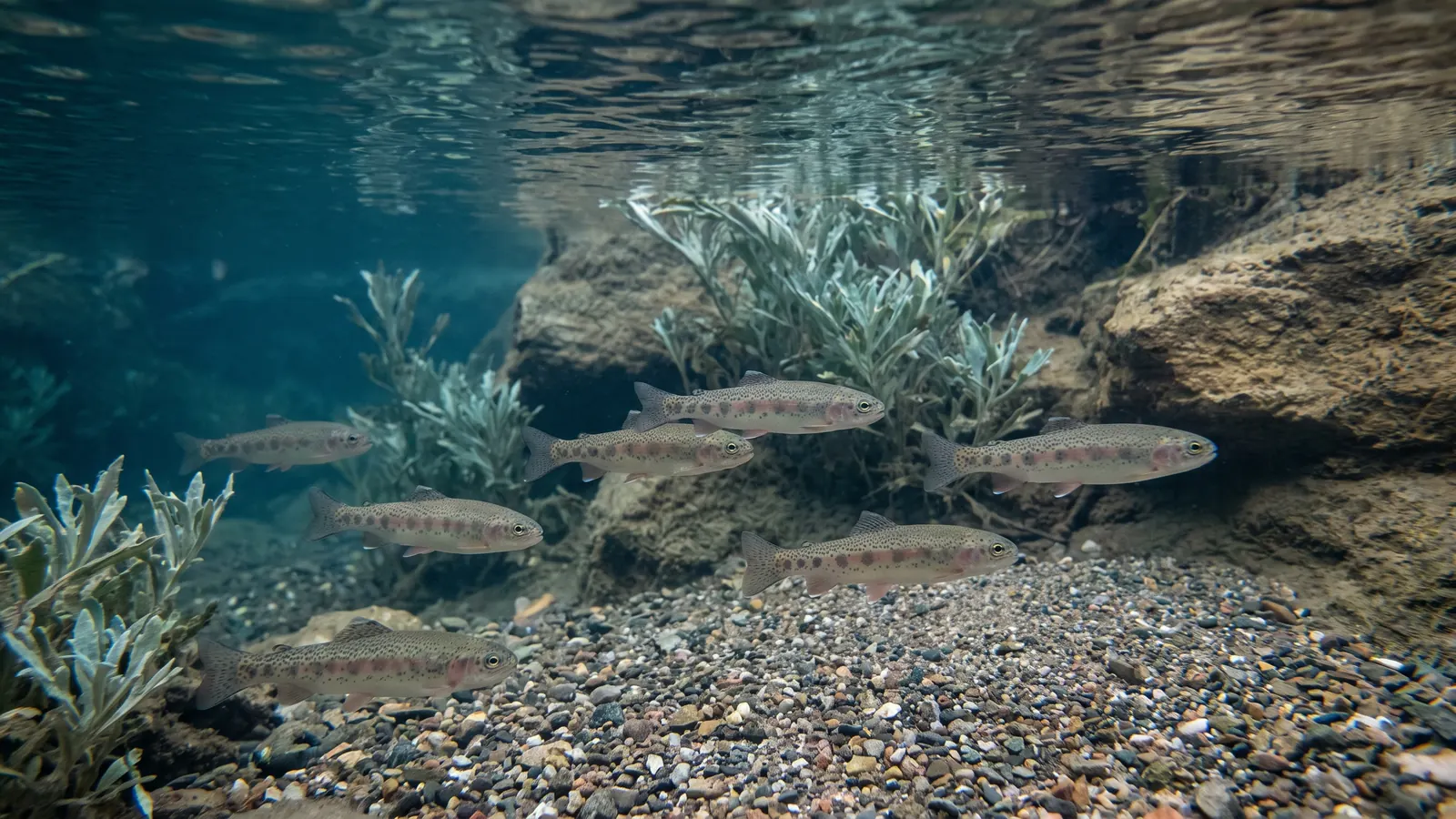
Fish Lake September Stocking: 30,007 Cutbow Recorded
Fish Lake received 30,007 cutbow across four Utah DWR stocking entries dated September 3, 2026. The listed average lengths range from 6.04 to 6.27 inches. These records document fish released at Fish Lake in Sevier County; they do not establish current catch rates, fish locations or access conditions.
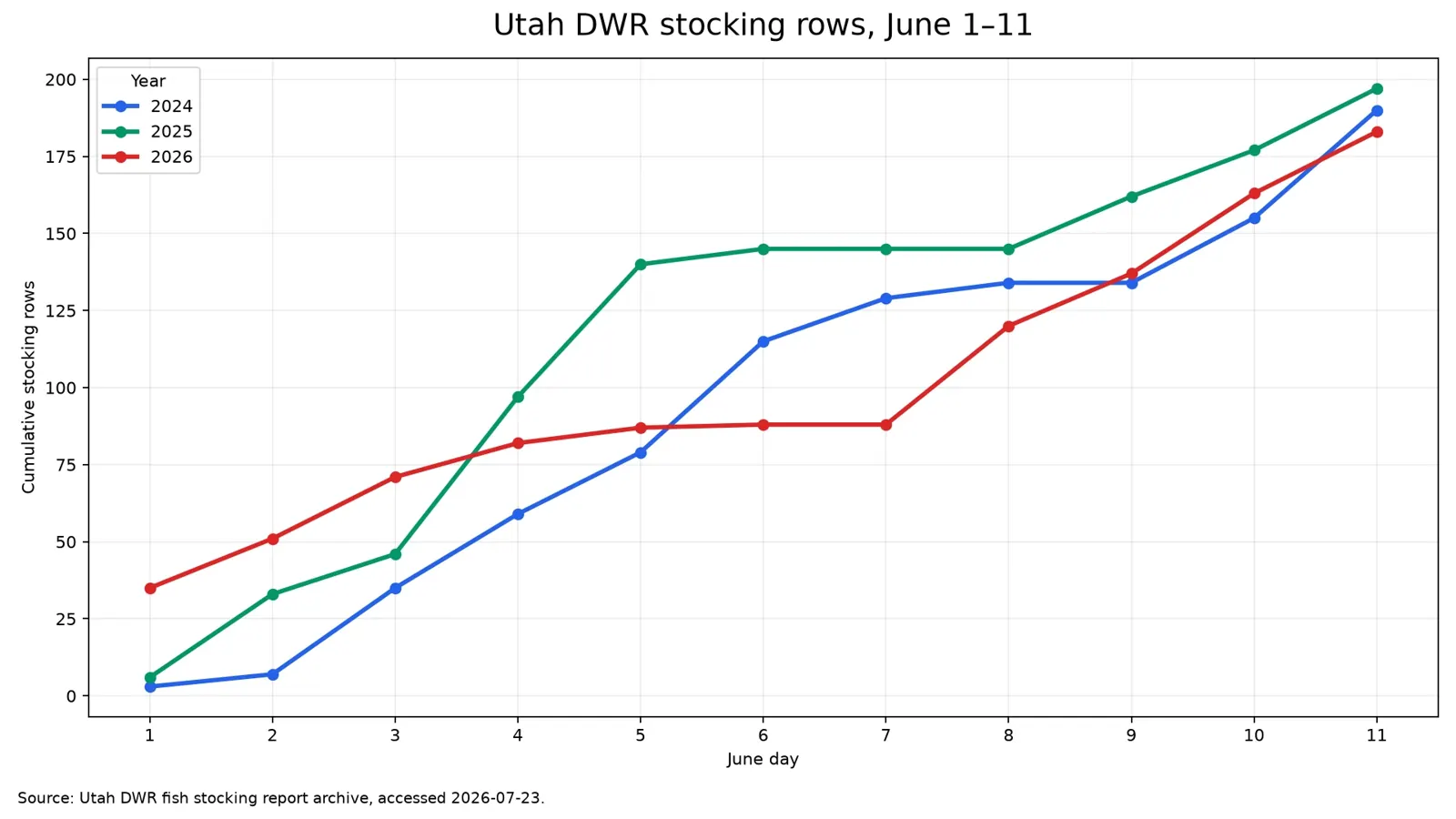
Was Utah Fish Stocking Really Down in Early June? What the DWR Archive Shows for 2024–2026
We pulled the Utah DWR stocking archive to test a popular early-June slowdown claim. The result: 2024 really did show 190 rows from June 1–11, but the current archive does not support the often-repeated “76 this June” number.
 Illustration
Utah’s Best Stocking Tool: How to Use the DWR Database to Find Recently-Stocked Fish Near You
Utah DWR calls its fish stocking database a “hidden gem.” Here’s how to use it to find recently-stocked trout and other fish near you — by date, county, species, and water.
More Utah Fishing Updates
Browse more regulation changes, local reports, and seasonal how-to guides.
Back to all articles