An Expert-Level Analysis of the Utah Lake Ecosystem: The Interconnected Challenges of Restoration
Utah Lake’s future depends on coordinated carp control, June sucker recovery, nutrient reduction, and basin-wide policy reforms that also safeguard the Great Salt Lake.
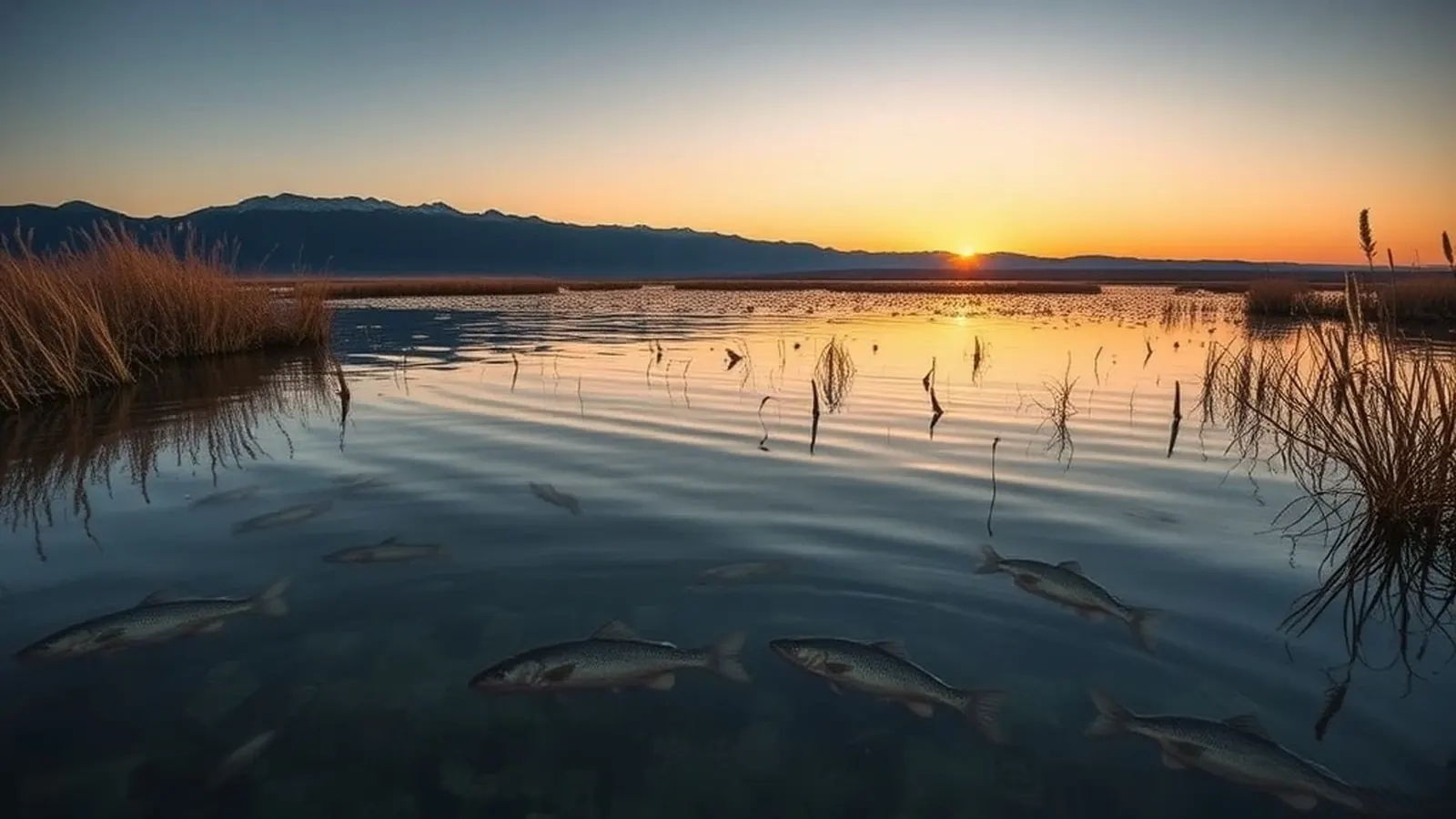
An Expert-Level Analysis of the Utah Lake Ecosystem: The Interconnected Challenges of Restoration
Utah Lake is the freshwater heart of Utah Valley, a shallow remnant of ancient Lake Bonneville that still feeds the Great Salt Lake through the Jordan River. Scientists describe the basin as a single, integrated hydrologic machine—when one piece falters, the entire system strains under the weight of lost inflows, declining habitat, and public-health risks (Utah Department of Environmental Quality; Great Salt Lake Commissioner). Utah Lake’s modern story is therefore inseparable from legislative decisions, water deliveries, and more than a century of ecological disruption that now threatens both local recreation and the survival of migratory birds downstream.
I. The Delicate Balance of Utah Lake
A historically altered ecosystem
Latter-day Saint pioneers diverted tributaries for irrigation, diked wetlands, and introduced non-native fish in the 1880s in a bid to stabilize food supplies. Those choices unintentionally dismantled the rooted vegetation that once stabilized the lake bed, softened storm surges, and provided nurseries for native fish (Utah State University Extension). Because the lake averages just 9 feet deep, even slight changes in sediment load or vegetation cover ripple quickly through clarity, nutrient cycling, and shoreline erosion (Utah Geological Survey).
Why Utah Lake matters statewide
The Jordan River supplies roughly 25% of the Great Salt Lake’s modern inflows, meaning every acre-foot conserved, polluted, or delayed at Utah Lake directly influences salinity gradients, dust-storm risks, and the hemispheric bird flyway supported downstream (Utah Division of Water Resources). Coordinated restoration is now seen as a linchpin for broader Great Salt Lake recovery planning rather than a standalone project.
II. The Invasive Species Crisis: The Common Carp’s Domination
Carp introduction and explosive dominance
Common carp (Cyprinus carpio) were intentionally stocked between 1881 and 1883 after native Bonneville cutthroat and June sucker harvests collapsed. Within a century, they accounted for 91% of the lake’s fish biomass—roughly 7.5 million fish by weight—crowding out natives and reshaping food webs (Utah Lake Commission). Female carp can broadcast over one million eggs each spring, overwhelming the recruitment of slower-growing native suckers and white bass.
Feedback loops that keep carp in control
Bottom-feeding carp uproot submerged macrophytes while they forage for invertebrates, releasing legacy phosphorus trapped in sediments and boosting turbidity. Water clarity routinely drops below 25 cm during wind events, choking photosynthesis and preventing the vegetative regrowth that larval June suckers need for cover (Utah Division of Water Quality). Phosphorus resuspension fuels harmful algal blooms (HABs) that close beaches, harm pets, and erode public trust in the lake as a recreational amenity (Utah Department of Health and Human Services).
Compounding invaders
Predatory introductions such as walleye, white bass, and northern pike further pressure June sucker by consuming juveniles and competing for zooplankton. Managers now pair carp control with targeted removals of pike in the Provo River delta and mandatory angler harvest regulations to keep predator numbers in check (Utah Division of Wildlife Resources).
III. A Keystone Species in Crisis: The June Sucker and Its Recovery
Collapse to the brink of extinction
Historical accounts estimate millions of June suckers once migrated up the Provo River each June; by 1999, fewer than 300 effective breeders remained, prompting the species’ listing as endangered in 1986 (U.S. Fish and Wildlife Service). Water diversions dried critical spawning reaches, while carp eliminated shallow vegetated nurseries that protected larval fish.
Recovery momentum and adaptive management
The June Sucker Recovery Implementation Program (JSRIP), launched in 1999, coordinates the Bureau of Reclamation, Central Utah Water Conservancy District, U.S. Fish and Wildlife Service, and Utah agencies. Stocking hatchery-reared juveniles, reconnecting tributary flows, and financing carp removal helped boost the population above 3,500 adults by 2016 and more than 18,000 by 2023, enabling downlisting to “threatened” status in 2021 (June Sucker Recovery Implementation Program). Managers now release larger, PIT-tagged fish that demonstrate higher survival than earlier, smaller stockings.
The recruitment bottleneck
Despite adult gains, larval survival still stalls without dense submerged vegetation. The Provo River Delta Restoration Project, a $47 million endeavor scheduled for substantial completion in 2025, is engineered to create 260 acres of braided wetlands that reconnect the river to a slow-water delta where larvae can rear safely before entering the lake (Central Utah Water Conservancy District). Monitoring crews already document native plant colonization and the first wild-spawned juveniles using the constructed channels, a critical sign that habitat recovery is taking hold (June Sucker Recovery Implementation Program).
IV. The War on Carp: Strategies, Challenges, and Progress
Industrial-scale netting
Commercial crews contracted through the JSRIP have removed more than 32 million pounds of carp since 2009, a 78% reduction in biomass relative to pre-project conditions. Winter seining beneath lake ice remains the workhorse technique because fish concentrate in dense schools, minimizing bycatch (June Sucker Recovery Implementation Program). Biomass models indicate vegetation rebounds once carp abundance is held below 27% of total fish biomass, a threshold managers now use for annual planning.
Automated trap innovation
Beginning in 2023, the Utah Lake Authority (ULA) and Utah Division of Wildlife Resources piloted solar-powered, timer-activated fyke nets that use cracked corn to entice carp into a holding chamber before the net lifts automatically. Each unit can capture 2,000–4,000 pounds per set and operate during summer dispersal periods when traditional nets struggle (Utah Lake Authority). Because the bait is unappealing to June suckers, incidental catch remains minimal, and the devices extend removal capacity year-round.
Habitat and shoreline restoration
Carp control is paired with emergent vegetation plantings, shoreline willow revetments, and the removal of invasive Phragmites australis to stabilize sediments. Since 2010, more than 1,800 acres of shoreline have been treated for invasive reeds, and 125 acres of submergent vegetation have been replanted using exclosures that keep carp out until plants mature (Utah Department of Natural Resources). Satellite imagery analyzed by Utah State University shows turbidity reductions of 15–25% in treated bays compared with pre-removal baselines (Utah State University Quinney College of Natural Resources).
Community-powered removal
To maintain public engagement, the ULA hosts the annual Great Carp Hunt fishing and bowfishing derby, diverting removed fish to composting operations that generate soil amendments for Utah County farms (Utah Lake Authority). While recreational removals are minor relative to commercial catch, the events build political support for long-term funding and educate residents about responsible disposal.
V. Water Quality, Nutrients, and Harmful Algal Blooms
Nutrient loading patterns
Roughly 60% of the lake’s phosphorus load arrives from point sources—chiefly wastewater reclamation facilities in Provo, Orem, and Spanish Fork—while 40% comes from stormwater and agricultural runoff. Upgrades completed in 2022 at the Provo River Water Reclamation Facility reduced effluent phosphorus to 0.5 mg/L, a 60% decline that already correlates with localized clarity gains near the discharge point (Provo River Water Reclamation Facility). Nutrient management plans now pair treatment upgrades with agricultural best management practices, including cover crops and riparian fencing.
Harmful algal bloom response
Utah’s HAB response program deploys satellite imagery, field sampling, and a color-coded advisory dashboard that closed Lindon Harbor, Provo Bay, and Lincoln Beach for 47 combined days in 2023. Elevated microcystin concentrations often follow wind-driven resuspension events triggered by carp rooting and summer thunderstorms, linking species management directly to human health outcomes (Utah Department of Health and Human Services). The state now funds rapid response teams that deploy activated carbon booms and issue text alerts to marinas.
Emerging contaminants
Monitoring in 2024 detected PFAS compounds in sediments and trace cyanotoxins in culinary intake canals, prompting coordination with the Division of Drinking Water to expand testing and evaluate treatment upgrades (Utah Department of Environmental Quality). Addressing these contaminants early prevents future regulatory roadblocks for recreation and culinary water diversions.
VI. Policy, Water Management, and Controversy
Integrating with Great Salt Lake recovery
The Utah Legislature’s 2024 SB 270 directs state engineers to model enhanced conveyance from Utah Lake to the Great Salt Lake, evaluate infrastructure bottlenecks, and quantify ecological trade-offs before any large-scale diversions proceed (Utah Legislature). The bill codifies coordination between the ULA, Great Salt Lake Commissioner, and Division of Water Resources, elevating Utah Lake restoration as a basin-wide climate resilience strategy.
The Lake Restoration Solutions (LRS) proposal fallout
A private consortium proposed dredging 18,000 acres of lakebed to build luxury islands between 2017 and 2022, pledging to fund restoration with real-estate revenue. In January 2023 the Utah Attorney General’s Office concluded the plan violated the public trust doctrine and constitutional restrictions on disposing of sovereign lands, leading lawmakers to repeal the enabling legislation in 2024 and dissolve the associated development agreements (The Salt Lake Tribune; Deseret News). The controversy cemented a policy shift toward publicly led, science-based restoration.
Funding landscape
The Utah Lake Authority now leverages a dedicated transient room tax, federal Bipartisan Infrastructure Law grants, and Central Utah Project mitigation funds to sustain monitoring, carp removal, and delta construction. The agency’s FY2024 budget allocates 42% to ecosystem restoration, 28% to recreation infrastructure, and 15% to science and monitoring, reflecting its three-pillar mission to build thriving ecosystems, vibrant communities, and world-class recreation (Utah Lake Authority).
VII. Looking Ahead: Governance, Research, and Long-Term Management
Utah Lake Authority governance reforms
The transition from the Utah Lake Commission to the Utah Lake Authority in 2023 created a political subdivision with bonding authority, technical advisory committees, and statutory requirements for adaptive management updates every five years. The Authority’s 2024 management plan establishes measurable benchmarks for carp density, submerged vegetation acreage, and HAB advisory days to guide annual work plans (Utah Lake Authority).
Science-based monitoring and transparency
A basin-wide monitoring network now integrates USGS stream gages, continuous water-quality sondes, and acoustic telemetry arrays tracking June sucker movement. Data feed into an open-access dashboard managed by Utah State University, allowing stakeholders to review carp catch-per-unit effort, vegetation regrowth, and HAB alerts in near real time (Utah State University Extension). Transparent reporting builds public trust and supports adaptive management when performance metrics slip.
Climate resilience and drought planning
Climate models project a 5–10% decline in snowpack-fed inflows by mid-century, underscoring the need for drought contingency plans that protect both lake levels and instream flows for spawning tributaries (Western Water Assessment). Strategies under evaluation include aquifer storage and recovery in Hobble Creek, managed wetlands that store spring runoff, and market-based water leasing programs that temporarily compensate irrigators for dedicating water to the lake during critical drought years (Central Utah Water Conservancy District).
VIII. Essential Data and Chronology
| Year | Milestone | | --- | --- | | 1881–1883 | Common carp stocked as a food source for pioneer settlers, eventually comprising 91% of Utah Lake’s fish biomass (Utah Lake Commission). | | 1986 | June sucker listed as endangered under the Endangered Species Act after populations crash below 1,000 adults (U.S. Fish and Wildlife Service). | | 1999 | June Sucker Recovery Implementation Program (JSRIP) formalized to coordinate federal, state, and local recovery efforts (June Sucker Recovery Implementation Program). | | 2009 | Large-scale commercial carp removal begins under JSRIP contracts, targeting a 75% biomass reduction (June Sucker Recovery Implementation Program). | | 2021 | June sucker downlisted from endangered to threatened as adult population surpasses recovery benchmarks (U.S. Fish and Wildlife Service). | | 2023 | Utah Lake Authority replaces the Utah Lake Commission and adopts an adaptive management charter with ecosystem, community, and recreation pillars (Utah Lake Authority). | | 2024 | Utah Legislature passes SB 270 to align Utah Lake restoration with Great Salt Lake recovery and repeals the Utah Lake Restoration Act that enabled island development (Utah Legislature; Deseret News). |
| Carp Removal Methods | Strengths | Limitations | | --- | --- | --- | | Winter commercial seining | Removes up to 500,000 pounds per season with low bycatch when fish aggregate under ice (June Sucker Recovery Implementation Program). | Weather-dependent; efficiency drops during high water years. | | Automated traps | Operate year-round, capture fish during summer dispersal, and require minimal staff time (Utah Lake Authority). | Capital-intensive pilot still gathering long-term performance data. | | Public derbies (Great Carp Hunt) | Builds political will, engages anglers and bowfishers, and diverts biomass to compost facilities (Utah Lake Authority). | Removes comparatively small biomass relative to commercial operations. |
IX. Key Takeaways for Stakeholders
- Integrated management is mandatory. Utah Lake’s fate is bound to the Great Salt Lake; restoration plans must track basin-wide hydrology, drought projections, and downstream salinity targets simultaneously (Utah Division of Water Resources).
- Habitat restoration hinges on carp control. Vegetation recovery, turbidity reductions, and June sucker recruitment all plateau without sustained funding for carp removal and shoreline revegetation (June Sucker Recovery Implementation Program).
- Science-driven governance is the new norm. The Utah Lake Authority’s adaptive management plan, funding strategy, and public dashboards mark a definitive shift away from speculative development toward transparent, metrics-based stewardship (Utah Lake Authority).
Have updates from your watershed council or field crew? Share them with the Utah Stocked Fish team so we can continue highlighting evidence-based solutions for Utah Lake’s recovery.
Get free email updates
Get Utah stocking updates, trip-planning links and gear notes by email. Email signup is separate from paid SMS/voice plans, app subscriptions and the Fishing Playbook PDF.
Unsubscribe from email updates at any time. Read our website privacy policy.
Related Articles
 Illustration
Utah Cutthroat Slam Funds 5 New 2026 Projects for Native Cutthroat Trout (What Anglers Should Know)
Utah DWR says the Utah Cutthroat Slam program is funding five new 2026 conservation projects. Here’s what they are and why they matter for native trout (and fishing) long-term.
 Illustration
Bear Lake Cutthroat Win: North Eden Creek Reconnected (10+ Miles Opened for Spawning)
Utah DWR and partners replaced a culvert near the mouth of North Eden Creek with a bridge, reconnecting the creek to Bear Lake and opening more than 10 miles for native cutthroat spawning and rearing.
 Illustration
5 New Conservation Projects Funded by the Utah Cutthroat Slam (2026): What Anglers Should Know
Utah DWR announced five new native-trout conservation projects funded by the Utah Cutthroat Slam. Here’s what the projects do, why they matter, and how anglers can help.
More Utah Fishing Updates
Browse more regulation changes, local reports, and seasonal how-to guides.
Back to all articles