Berkley Dough Rider: How to Fish the PowerBait Spinner
The Berkley Dough Rider is an inline spinner with a body pocket made to hold PowerBait dough. It combines a moving lure with a scent presentation, giving Utah trout anglers a new option for covering water. This guide explains the setup, a starting retrieve, Amazon buyer feedback, and the bait rules to check first.
As an Amazon Associate we earn from qualifying purchases.
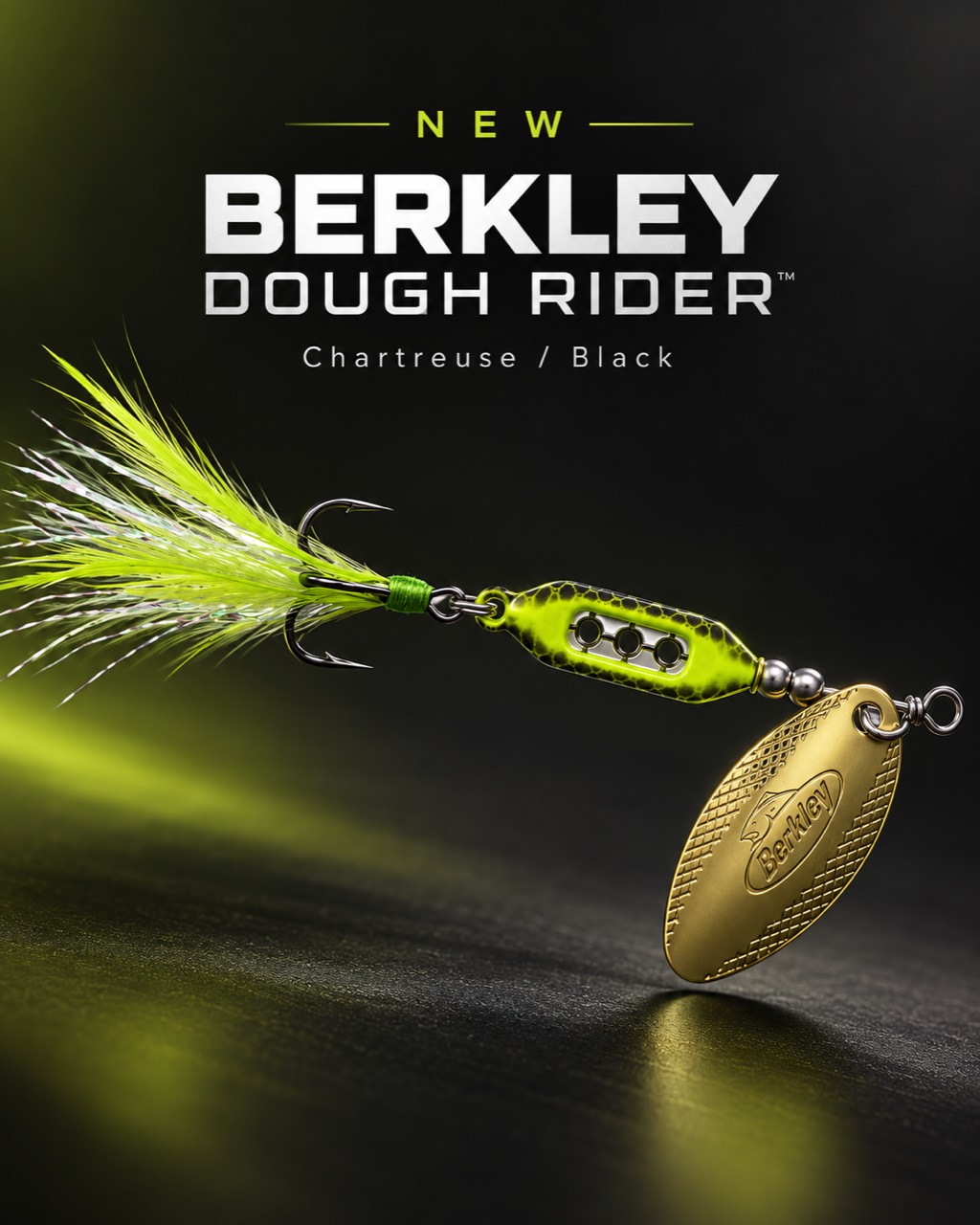
Why are we excited about this spinner?
Some tackle ideas are easy to picture using on your next trip. This is one of them: the familiar rhythm of casting and retrieving a spinner, with a place to carry dough in the lure itself. For an angler who already switches between a spinner and a PowerBait rig, the appeal is immediate.
The interesting part is the body. Berkley calls its open pocket Scent Vent and designed it for PowerBait dough. The blade provides the spinner's flash and vibration; the loaded pocket adds scent. Those are the manufacturer's design claims, not evidence that it will outfish your favorite lure. See Berkley's product details.
Our take: this is an appealing experiment for anglers who enjoy covering shoreline at waters where bait is permitted. We have not field-tested the Dough Rider. Our overview draws on manufacturer specifications, the Amazon listing, and the visible customer reviews checked on September 7, 2026.
How do you load and fish a Dough Rider?
Here is our suggested starting routine. Treat it as a way to learn the lure in your water, then adjust to what you can see and feel.
- Check the rules first. Confirm that bait is permitted at the exact water and section you plan to fish. A spinner carrying PowerBait is a bait presentation in Utah.
- Inspect the lure. Look at the wire, blade attachment, and hook before tying on. If something is bent or damaged, set it aside instead of trying to force it straight.
- Press dough into the body pocket. Keep it in the pocket and clear of the moving blade and hook. Start with a small amount and inspect the lure beside the bank before casting.
- Check the action close to you. Make a short cast into water you can see. Retrieve steadily and watch the blade. This gives you a feel for a working pace before a longer cast.
- Cover a fan of water. Change your casting angle and the amount of time you let the lure sink. Keep the retrieve controlled, and check for weeds or debris when the action feels different.
- Check and reload. Inspect the pocket after a fish, snag, or several casts. Carry extra dough for a longer session; there is no verified fixed refill interval.
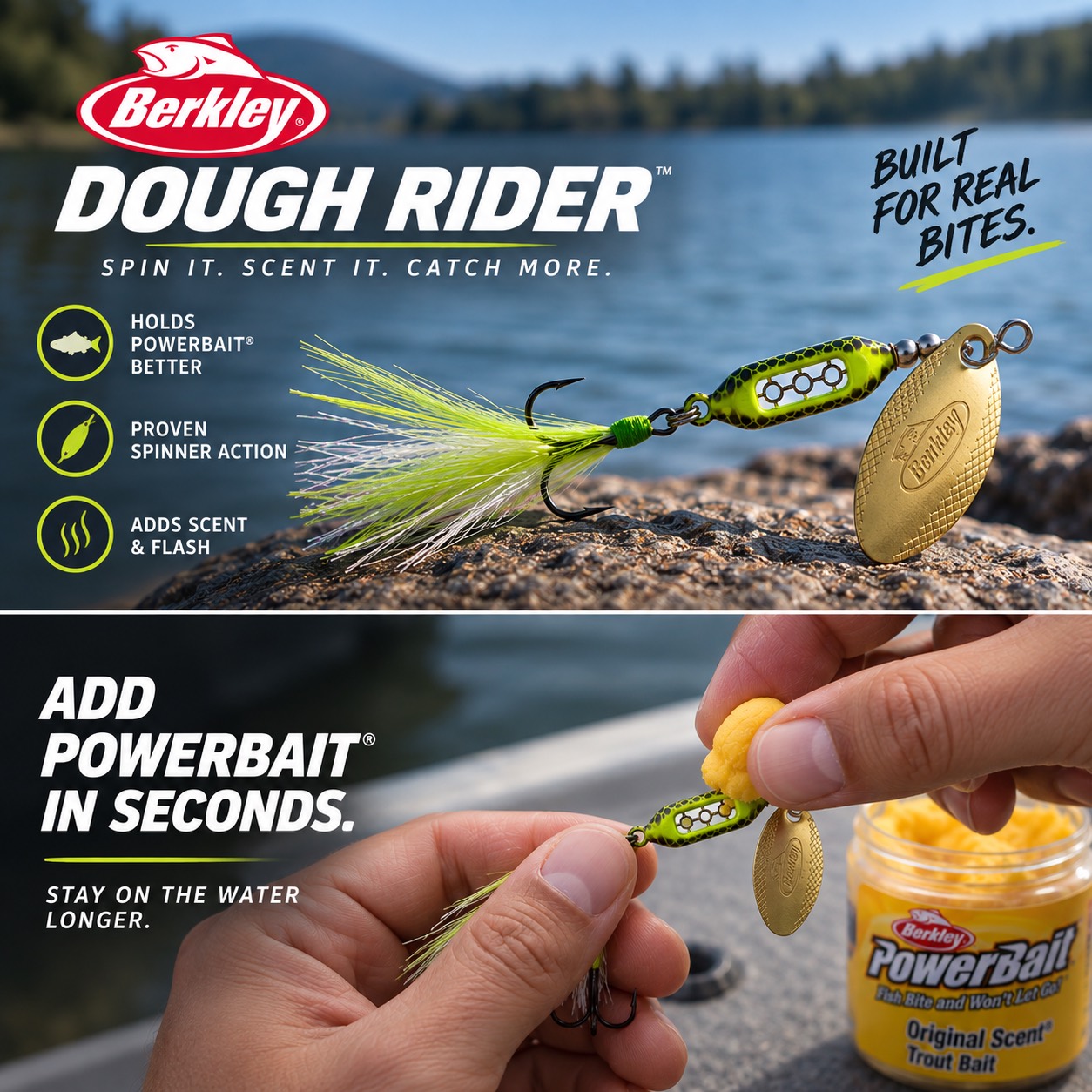
Start with a rod whose printed lure-weight range includes your chosen Dough Rider. A light spinning setup is a practical place to begin with the smaller options. The linked 1/4 oz version needs to suit your rod too; do not assume every ultralight rod is rated for it. Our stocked trout kit covers the rest of a simple pond setup.
What would we try from a Utah shoreline?
At a bait-permitted pond, we would begin with short casts along an open bank. Find a retrieve that lets you watch the lure work, then gradually cover more water. If the first few casts collect weeds, change the angle or retrieve sooner. If the lure stays too high, try a longer sink before starting the same retrieve.
At a reservoir, separate the casting problem from the fish-finding problem. A larger lure may suit the rod and the distance you need, but it cannot tell you where fish are feeding. Try a few shoreline angles and depths before deciding that a particular color is the answer. These are starting suggestions, not a Dough Rider catch report from a Utah reservoir.
Use the Utah fish stocking report to identify recent releases, then check access and regulations in our waterbody guides. A stocking record tells you fish were released. It does not promise an active bite when you arrive.
What are Amazon buyers saying?
On September 7, 2026, the linked listing displayed 4.5 out of 5 from 29 global ratings. We read eight visible U.S. reviews and one Canadian review. They cover several sizes and colors; this is a small, mixed-variant sample, not 29 written reviews of the 1/4 oz Chartreuse/Black model.
- Catch reports: an August 29 buyer reported catches across species. A Canadian buyer described using the lure while trolling for trout.
- Build and bait: a July 19 buyer praised the hooks and noted the included dough. The Canadian buyer also liked the dough retention.
- Durability concerns: a September 3 buyer said the smaller lure snapped while being straightened after a bluegill catch. A May 13 buyer reported losing the spinner blade by the end of a fishing day.
Those comments make the design interesting to try and give us a reason to inspect the hardware. They do not establish a failure rate or a catch-rate advantage. Read the current Amazon reviews before choosing a variant. Ratings and the reviews displayed can change.
Which size and color should you start with?
Berkley lists 1/16, 1/8, 1/4, and 3/8 oz weights. Our linked selection is Chartreuse/Black, 1/4 oz, hook size 7. The product family also includes a separate minnow profile, so check the model as well as the color when comparing listings.
We would choose by the rod's rating, casting room, and the depth we want to explore. A smaller option gives you a different starting presentation from the linked 1/4 oz model; neither is automatically the best choice for every stocked trout. Chartreuse/Black is the feature here because its bright body makes the pocket easy to see in the product photography, not because we have proved it is Utah's best color.
The Dough Rider gear page puts the weight options and buying checks in one place. You can also compare the role of a spinner with other options in our tackle and lures guide.
Where is a scented spinner allowed in Utah?
Utah's rules distinguish an artificial lure from one treated with a fish attractant. The 2026 DWR guidebook specifically classifies PowerBait and scented lures as bait. Use a loaded Dough Rider only where bait is allowed. Do not assume that removing visible dough makes a previously scented lure acceptable on artificial-only water.
Read Utah's fishing rule R657-13 and the current guidebook and emergency changes before the trip. The rule for your specific water is part of choosing the right presentation.
Is it worth a place in the tackle box?
For anglers who like trying a new presentation, the combination is easy to get excited about. It offers a way to fish dough while staying active and exploring the shoreline. The first trip is also a useful comparison: bring your regular spinner, record the conditions, and pay attention to action, dough retention, and hardware.
That is the test we would want before calling it a new favorite. For now, the Dough Rider earns a close look for its design, with the buyer-reported durability issues kept in view. See the selected Dough Rider on Amazon, or use our gear overview to check the details first.
A few things anglers ask
Does the Dough Rider come with PowerBait?
Berkley says a trial pack of PowerBait dough is included. Carry extra if you want to reload during a trip, and check the selected listing for package details.
How long does the dough stay in the lure?
We did not find a verified number of casts or minutes. One visible Amazon buyer reported that it held up while trolling for trout, but that is an individual experience. Inspect the pocket during your session and reload when needed.
Can I use a loaded Dough Rider on artificial-only Utah waters?
No. Utah treats PowerBait and scented lures as bait, and bait is prohibited on waters designated artificial fly and lure only. Check the current DWR guidebook and water-specific rules before fishing.
Sources: Berkley, Amazon customer reviews, and Utah DWR. Checked September 7, 2026.
Make the next cast interesting.
Take a closer look at the Dough Rider, then find the setup and water that fit your next trip.
As an Amazon Associate we earn from qualifying purchases. See Amazon for current price and availability.