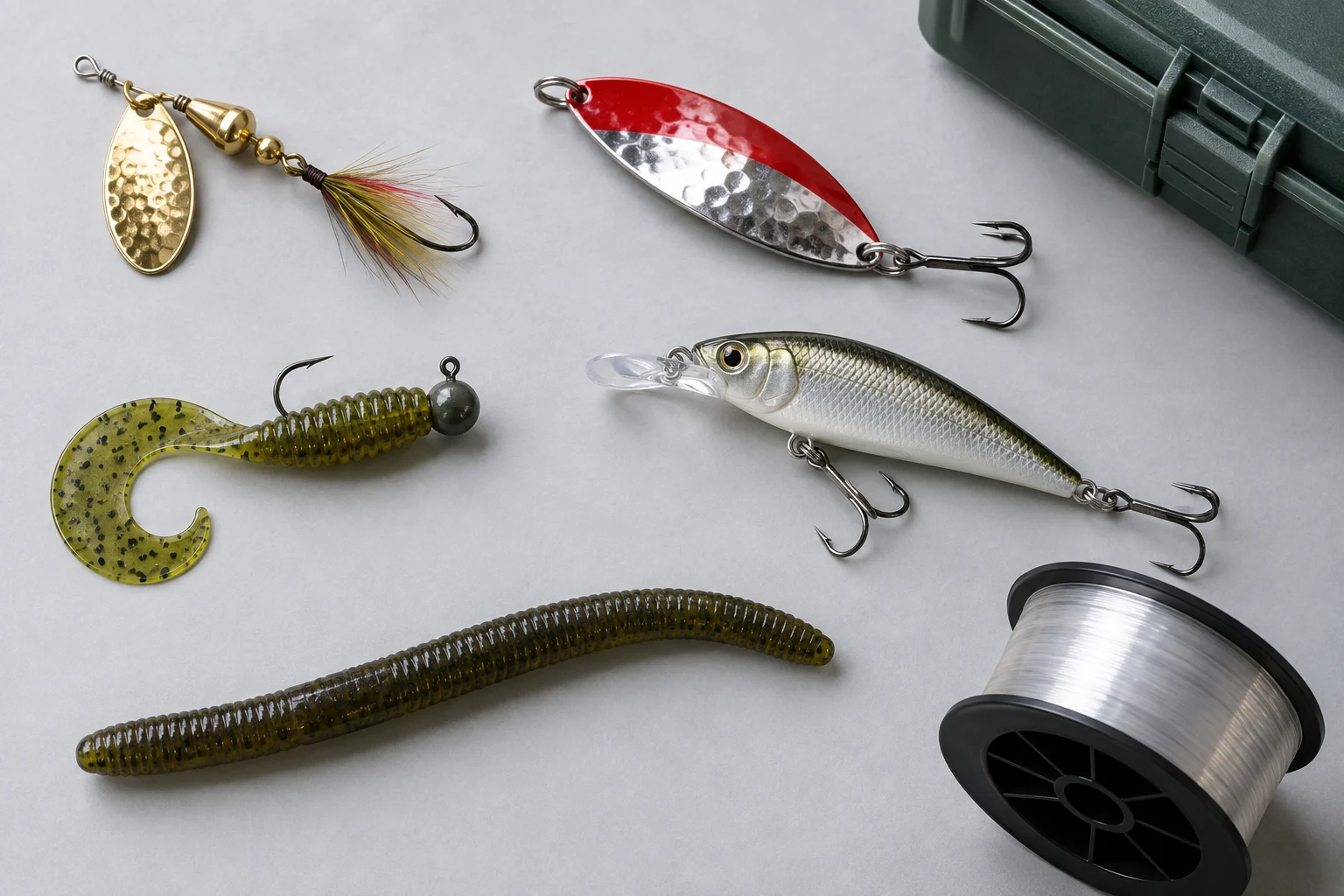
Different shapes. Different jobs. Learn what each one does.
The quick answer
For stocked trout in open water, start with a 1/8 oz inline spinner, a light spinning rod and 4–6 lb mono. Reel steadily and adjust your depth. Bass, panfish and deeper water call for different starting choices below.
Build your first setup.
Four choices. A practical starting point you can adjust on the water.
1Target fish
2Water
3Depth & cover
4Visibility
Open-water guidance. Always match tackle to your rod’s printed ratings.
Step 1 of 4
Change your choices anytime.
Know what’s in your tackle box.
Fourteen common freshwater lure families. What they imitate, where they fit, and how to fish them.
14 lure types
As an Amazon Associate I earn from qualifying purchases. Shopping links are searches, not verified product listings. Illustrations show generic tackle.
Showing 14 of 14 lure types
Trout · Bass · Panfish
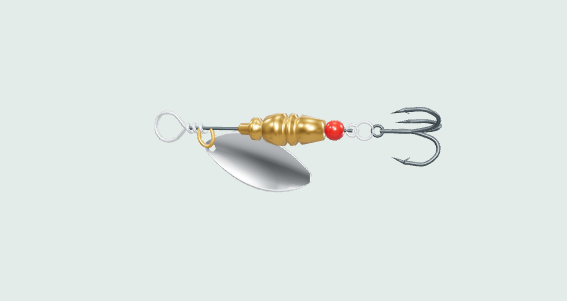
Inline spinner
Find willing fish with a rotating blade that flashes and vibrates.
Shallow to middle
When to reach for it
A useful first cast along open pond banks or through stream runs.
How to fish it
Cast, let it settle briefly, then reel steadily just fast enough to keep the blade turning. Test the action beside you first.
Starting size
Trout: 1/16–1/8 oz; larger water: up to 1/4 oz
Rigging & mistakes to avoid
Tie to the eye or use a small snap if the maker allows it. A small swivel can help persistent line twist; oversized hardware can spoil the action.
Watch out for: Thick weeds and very slow retrieves that stop the blade.
Why this depth? Search shallow and midwater lanes. A longer initial sink can reach lower fish, but retrieve lift and current change its path.
Why this retrieve? A steady retrieve keeps the blade working and searches open water. Repeated bottom hops can interrupt the blade and catch exposed hooks.
Trout · Bass · Walleye · White bass
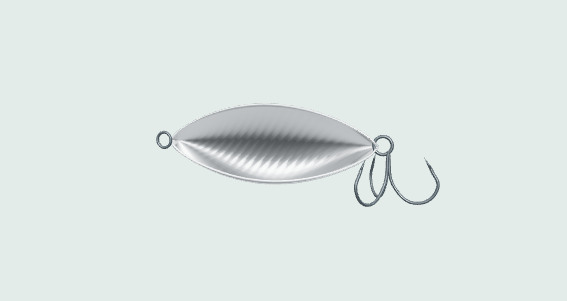
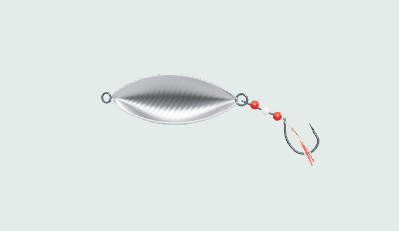
Casting spoon
Cover open water with the wobble and flash of a fleeing baitfish.
Middle to deep
When to reach for it
Reservoir banks, wind, or fish holding beyond a light spinner’s casting range.
How to fish it
Count it down, then retrieve at a pace that makes it wobble. Slow down if it spins continuously. Repeat the countdown that produces bites.
Starting size
Trout: 1/8–1/4 oz; larger fish: 1/4–1/2 oz
Rigging & mistakes to avoid
Usually fish its own weight. Follow the maker’s snap or swivel guidance; a casting spoon differs from a thin trolling spoon.
Watch out for: Weed mats and rocky bottoms where exposed hooks hang up.
Why this depth? A casting spoon sinks, so the countdown sets its starting level. Its weight, shape, current and retrieve determine the rest.
Why this retrieve? Steady wobbling searches suspended fish. Lift-and-fall adds a fluttering presentation when fish hold lower and the bottom is relatively clear.
Trout · Bass · Panfish · Walleye · White bass
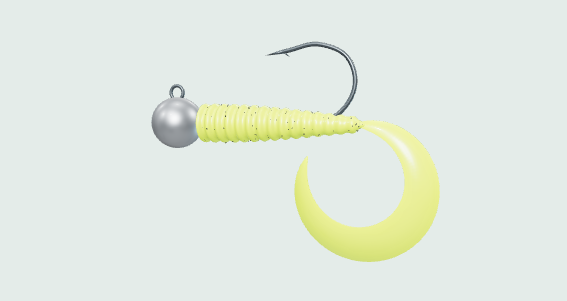
Jig & grub
Put a small meal at a chosen depth with a weighted hook and soft body.
Any depth with the right head
When to reach for it
Fish are deeper, less willing to chase, or feeding near a drop-off.
How to fish it
Let it fall on a controlled line, then swim it slowly or lift and let it settle. Watch the line for a sideways tick during the fall.
Starting size
Panfish: 1/64–1/16 oz; trout: 1/32–1/8 oz; walleye: 1/8–3/8 oz
Rigging & mistakes to avoid
Thread the plastic straight. The jig head is the weight; start light and increase only to reach and feel the target depth.
Watch out for: A head so heavy that it wedges between rocks or drops past the fish.
Why this depth? The weighted head takes the grub down. Choose the lightest head that reaches the fish with control; extra weight makes it fall faster.
Why this retrieve? Jigging revisits a small depth band and gives fish time to take the falling lure. A steady swim covers more water when fish are willing to chase.
Bass · Walleye · White bass · Trout
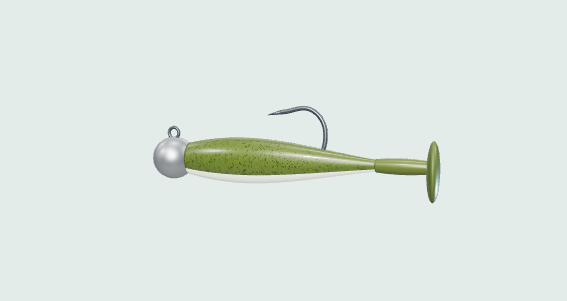
Paddletail swimbait
Imitate a swimming baitfish with a kicking soft tail.
Middle; along weed edges
When to reach for it
Predators are following minnows in open water or along cover.
How to fish it
Swim steadily, occasionally pause, and keep the tail working. Change the head weight to change running depth.
Starting size
Small fish: 2–3 in; bass/walleye: 3–4 in on a matched head
Rigging & mistakes to avoid
Use a correctly sized jig hook in open water or a weighted weedless hook for vegetation. Include the plastic in total casting weight.
Watch out for: Rigging the body crooked, which makes it roll.
Why this depth? Head weight and sink time place the lure in its lane. Faster reeling often lifts a weighted soft swimbait; use a lighter head for shallow water.
Why this retrieve? Steady swimming imitates a travelling minnow. A brief drop changes the pace for following fish; constant sharp jigging is not needed to make the tail kick.
Bass
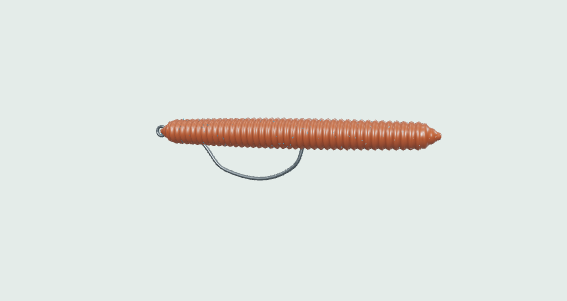
Soft plastic worm
Offer a slower, easy-to-catch meal near bass cover.
Shallow to bottom
When to reach for it
Bass ignore fast lures, especially near pockets, docks or weed edges.
How to fish it
Let it fall, pause, then move it a short distance. Watch the line; bites may feel like extra weight rather than a sharp hit.
Starting size
4–6 in; weightless or about 1/8–1/4 oz added weight
Rigging & mistakes to avoid
Texas rig: slide on a bullet weight, tie an offset hook, and bury its point lightly in the plastic. Wacky rig: hook through the middle for open pockets.
Watch out for: Treating every worm rig as weedless. A wacky rig leaves the hook exposed.
Why this depth? A rigged worm can fall slowly through shallow cover or reach deeper structure with suitable weight. Rigging and plastic buoyancy matter.
Why this retrieve? A slow fall and long pause keep it near a small target. Fast continuous reeling pulls it away from the pocket before reluctant fish have much time.
Bass · Walleye · Trout
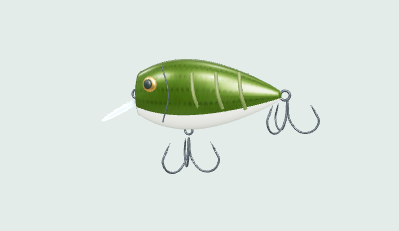
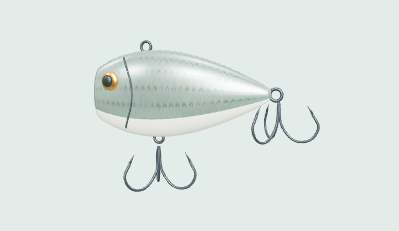
Diving crankbait
Search a defined depth with a wobbling hard bait.
Model-specific diving depth
When to reach for it
You want to cover a bank or contour efficiently.
How to fish it
Reel to the working depth, then mix a steady retrieve with short pauses. Choose a model that runs above snaggy bottom.
Starting size
Match package diving range and rod lure rating
Rigging & mistakes to avoid
Tie to its supplied ring or use the connection the maker recommends. Extra sinkers change the intended action.
Watch out for: Assuming every crankbait dives to the same depth. Line diameter and cast length change the running depth.
Why this depth? The diving bill pulls this floating example down under forward motion. Choose a model’s rated diving range for the target depth; faster is not a universal shortcut to deeper.
Why this retrieve? Steady cranking follows a contour efficiently. A pause interrupts the wobble and lets a floating model rise over an obstacle; sinking versions behave differently.
Trout · Bass · Walleye
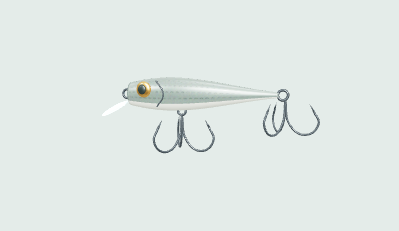
Minnow / jerkbait
Show fish an injured minnow that darts, then pauses.
Shallow to middle; model dependent
When to reach for it
Clearer water and fish willing to track a minnow profile.
How to fish it
Twitch the rod, take up slack, and pause. Experiment with longer pauses when fish follow without committing.
Starting size
Trout: 2–3 in; bass/walleye: 3–4 in
Rigging & mistakes to avoid
Use a light connection at the nose or supplied split ring. Keep extra weight off the lure unless its instructions call for it.
Watch out for: Confusing floating, sinking and suspending models. Check how yours behaves in the water.
Why this depth? Use the model’s running-depth and buoyancy information. This lesson shows a suspending example: the pause holds near its lane rather than sinking to bottom.
Why this retrieve? Short twitches make a darting minnow; pauses give following fish time to commit. A long steady retrieve produces a different, more continuous swimming presentation.
Bass
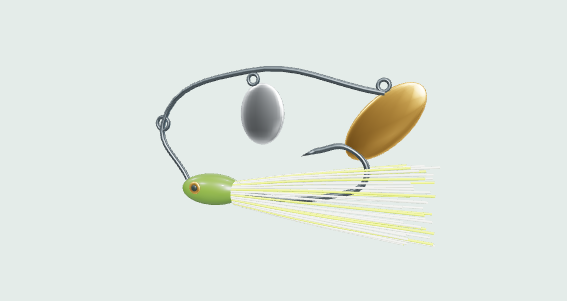
Spinnerbait
Combine a skirted hook with flashing blades to search bass cover.
Shallow to middle
When to reach for it
Wind, stained water, or scattered vegetation makes a visible moving lure useful.
How to fish it
Reel steadily alongside grass or wood. Slow the retrieve to keep it deeper, maintaining blade movement.
Starting size
1/4–3/8 oz is a practical starting range
Rigging & mistakes to avoid
Tie to the intended wire line tie. Use a rod rated for the total lure and any trailer.
Watch out for: Confusing it with a small inline trout spinner; it needs a stronger bass setup.
Why this depth? Weight, blade lift and retrieve speed balance its running level. Slowing down can keep it lower, provided the blades continue to work.
Why this retrieve? A moving search bait suits scattered cover and active fish. Slow rolling follows a lower lane; repeated sharp hops are not required to keep its blades turning.
Bass
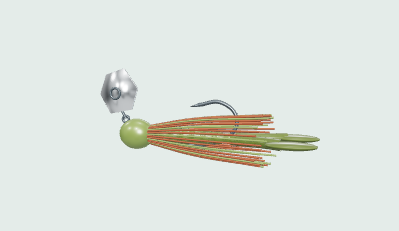
Bladed jig
Send a strong vibration through the water while swimming a skirted bait.
Shallow to middle
When to reach for it
Bass are around grass edges or visibility is reduced.
How to fish it
Reel until you feel the blade pulse, then maintain contact. Run it over submerged grass rather than dragging it into a mat.
Starting size
3/8 oz head plus a matching soft trailer
Rigging & mistakes to avoid
Connect at the supplied clip as directed by the maker. A medium-heavy rod is often suitable, but check its rating.
Watch out for: Trying to force an exposed-hook model through thick branches.
Why this depth? Head weight, trailer drag and retrieve speed set the lane. A lighter presentation can stay above grass; a suitable heavier one can search deeper.
Why this retrieve? Continuous reeling makes the blade pulse. Stop-and-go adds a falling change of pace; choose it deliberately instead of shaking the rod throughout the retrieve.
Bass · White bass
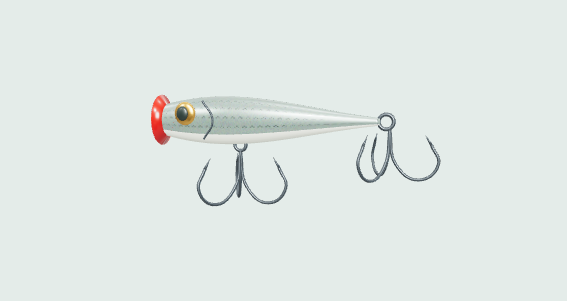
Topwater popper / walker
Bring a baitfish imitation across the surface where fish can attack from below.
Surface
When to reach for it
Fish are visibly feeding up, especially during calm low-light periods.
How to fish it
Pop and pause a cupped-face lure. For a walking bait, twitch on controlled slack so it steps from side to side.
Starting size
Match baitfish size and the rod’s casting range
Rigging & mistakes to avoid
Mono or braid commonly suits surface work. Let the rod load with the fish before setting; an early jerk can pull the lure away.
Watch out for: Using surface activity alone as proof of feeding fish; wind and insects can fool you. Deep inactive fish may ignore it.
Why this depth? A floating topwater stays at the surface. Choose it when fish are feeding upward; reeling harder does not turn a popper into a deep-diving lure.
Why this retrieve? A popper pushes water with short pulls and pauses. A walking bait uses repeated controlled-slack twitches to step side to side.
Bass
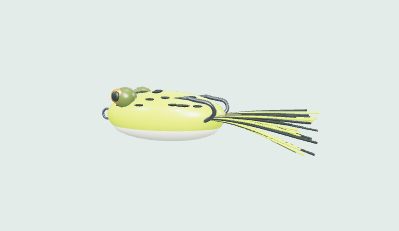
Hollow-body frog
Cross floating vegetation with protected hook points.
Surface vegetation
When to reach for it
Bass are under dense surface vegetation that catches exposed hooks.
How to fish it
Work it across the mat, then pause in openings. Wait until you feel the fish before driving the hooks home.
Starting size
Usually 1/2–3/4 oz; check the actual model
Rigging & mistakes to avoid
A heavy-power bass rod and roughly 50–65 lb braid are common starting equipment for mats. Stay within the rod’s lure rating.
Watch out for: Light trout rods and light mono, which struggle to set the hooks and pull fish out.
Why this depth? The hollow body floats on vegetation and in openings. Its protected hook points suit surface cover; it is not a deep-water presentation.
Why this retrieve? Short pulls cross the mat, then a pause holds the frog over a promising opening. Fast uninterrupted reeling can rush past that small target.
Walleye · Bass · White bass
Blade bait / lipless crank
Reach deeper fish with a compact vibrating lure.
Middle to deep
When to reach for it
Fish are schooling deeper or holding near a clean bottom.
How to fish it
Lift just until you feel vibration, then follow the lure down without losing all contact. Lipless cranks can also be steadily retrieved.
Starting size
1/4–1/2 oz for many freshwater uses
Rigging & mistakes to avoid
Use the specified line-tie hole or clip on blade baits. Different holes can change their action.
Watch out for: Hard ripping around snaggy rock or timber with exposed treble hooks.
Why this depth? These compact sinking lures can reach lower fish. Sink time and weight set the starting level; exposed trebles need room above snaggy bottom.
Why this retrieve? Lift-and-fall concentrates vibration in short bursts over deeper fish. A lipless crank can also be swum steadily to search a wider area.
Trout · Panfish · Bass
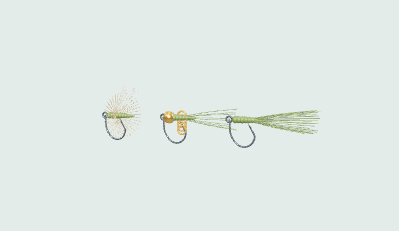
Dry fly, nymph & streamer
Match insects or small prey above and below the surface.
Surface to bottom
When to reach for it
Fish are feeding on insects or a subtle presentation fits better than a flashing lure.
How to fish it
Drift a dry fly or nymph with the current; strip a streamer to imitate swimming prey. Mend line to reduce unwanted drag.
Starting size
Match local prey; fly hook size and fly-line weight are different scales
Rigging & mistakes to avoid
Use a fly outfit with a tapered leader, or a casting bubble and small fly on a spinning outfit. Keep bubble and fly far enough apart to drift naturally.
Watch out for: Adding heavy split shot to a dry-fly presentation you need to float.
Why this depth? A dry fly rides the surface; a weighted nymph drifts below it; a streamer can be worked through several depths. Fly type and rig set the level.
Why this retrieve? Dry flies and nymphs often drift with the current rather than being reeled quickly. Streamer strips actively imitate swimming prey.
Trout · Kokanee
Trolling spoon / kokanee rig
Present a small lure consistently behind a moving boat.
Controlled trolling depth
When to reach for it
You can control boat speed and use an appropriate depth system to reach schooling fish.
How to fish it
Move slowly enough for the lure and dodger to work correctly. Check the action beside the boat before sending it down.
Starting size
Small trolling spoon or kokanee hoochie matched to its dodger
Rigging & mistakes to avoid
Dodger, leader length and lure must work together. Downriggers or other depth-control gear require a separate setup; follow the equipment instructions.
Watch out for: Assuming a light trolling spoon casts like a dense casting spoon, or that line let out equals depth.
Why this depth? Boat movement supplies forward speed. Line, weight or a depth-control system must place the lure at the fish’s level; this lure-only diagram omits that equipment.
Why this retrieve? A steady tow maintains repeated wobble. It is a different presentation from hand-jigging; boat-speed changes can affect both action and depth.
The lure is one part of the setup.
Match the rod, line and lure before worrying about brands.
Read the rod label first.
Power is how much force it takes to bend the rod. Light power suits small lures; medium and medium-heavy rods handle larger presentations. Action describes where the rod bends. A fast action bends nearer the tip; a moderate action bends farther down.
The printed lure-weight range is the key casting limit. A rod marked 1/8–3/8 oz is a poor match for either a tiny 1/64 oz jig or a heavy frog. Add up the lure, plastic, sinker and other casting weight.
A spinning outfit is a practical first choice. You can learn a baitcaster later if heavier bass techniques call for it.
Affordable, forgiving stretch and straightforward knots. A good first spool for many light spinning setups.
Fluorocarbon
Sinks and can be useful as a less-visible subsurface leader. It is not invisible, and stiff line can be awkward on a small reel.
Braid
Thin for its strength, with very little stretch. Useful for sensitivity or vegetation, but it needs a compatible knot; add a leader when the presentation calls for one.
These are editorial starting ranges, not universal specifications. Cover, current, fish size and the rod manufacturer’s limits take priority. The reel’s drag lets line out under load; line test is not a maximum fish-weight label.
How much weight do I need?
Use the lightest setup that reaches the fish and gives you control. More weight can help in wind or current, but it also speeds the fall and increases snagging.
Rod & reelMain lineTerminal knotWeighted lure
Simple direct-to-lure setup. A braid-to-leader system adds a joining knot and leader before the terminal knot.
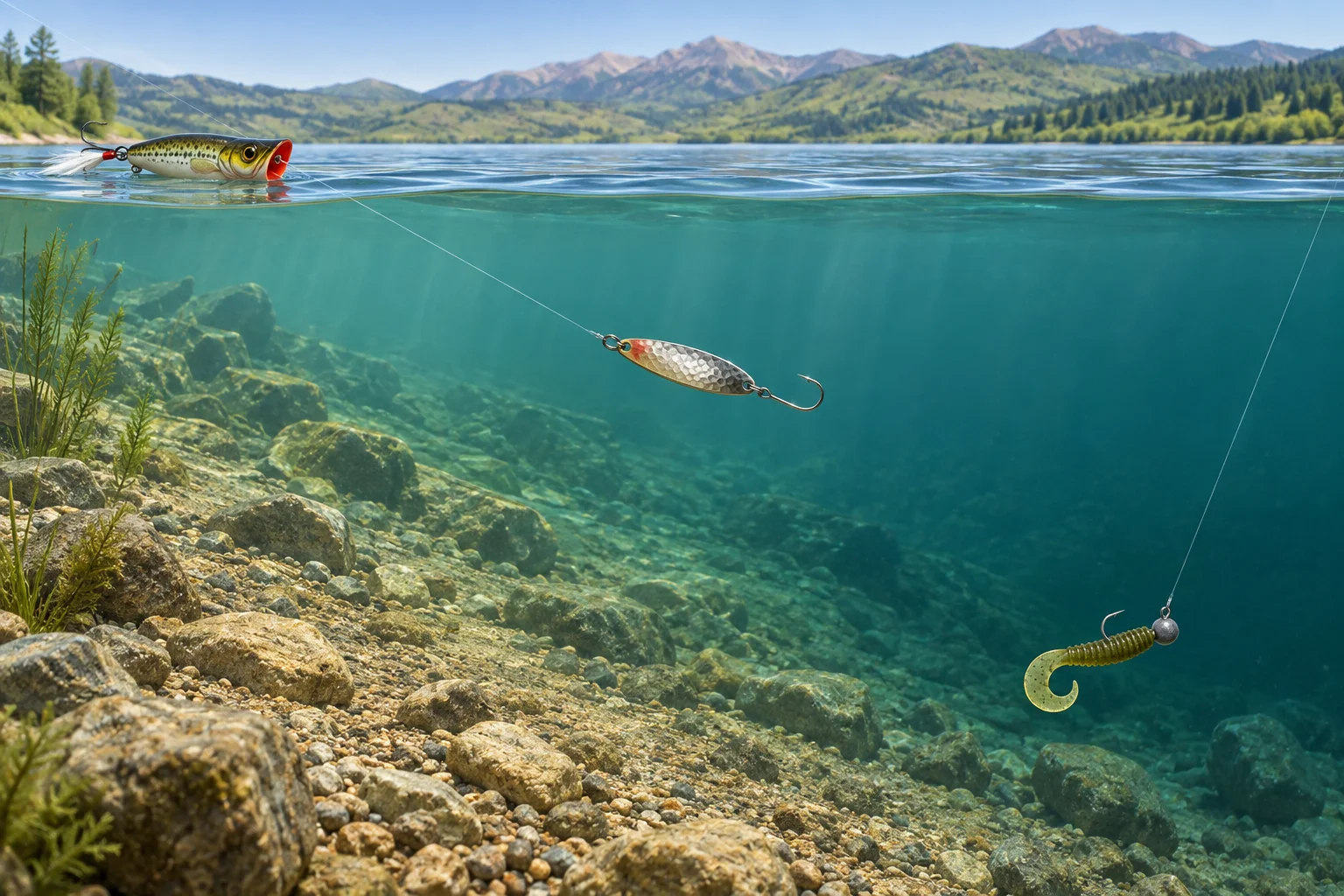
Fish the level, then change the lure. A popper stays on top; a spoon can search midwater; a weighted jig can reach deeper. These are example presentations, not fixed depth limits. Illustration is not to scale.
Lure weight
Spinners, casting spoons and hard baits usually provide their own casting weight. Extra split shot may stop them working correctly. Choose a heavier model or change the presentation when you cannot reach the fish.
Jig-head weight
The lead or tungsten head is already the sinker. A lighter head falls more slowly; a heavier head can stay down in current. The soft body adds casting weight too.
Separate sinkers
Split shot helps some float or drift rigs; bullet weights suit Texas-rigged plastics; sliding sinkers suit some bottom bait rigs. Keep the rig appropriate to the water’s bait rules.
Ounces to grams: a quick tackle reference
1/64 oz ≈ 0.44 g · 1/32 oz ≈ 0.89 g · 1/16 oz ≈ 1.77 g · 1/8 oz ≈ 3.54 g · 1/4 oz ≈ 7.09 g · 3/8 oz ≈ 10.63 g · 1/2 oz ≈ 14.17 g
A “5-weight” fly rod uses a fly-line classification. It does not mean a 5 oz lure.
A tidy knot you can tie and test beats a complicated one you cannot. “Tag end” means the short free end; “standing line” is the long line running back toward your reel.
Improved clinch
A beginner connection from light mono or fluorocarbon to a hook, swivel or lure.
Pass the tag end through the eye and leave several inches to work with.
Wrap the tag around the standing line five to seven times.
Pass the tag through the small loop beside the eye, then through the larger loop you just made.
Wet the line. Draw the knot down slowly, test it under steady tension, and trim the tag with a small margin.
Not the default for slippery braid. Wet it, seat the wraps neatly and pull-test before casting.
Join a main line to a leader when their diameters are reasonably compatible.
Overlap the main line and leader by several inches.
Make a loop with one tag and wrap it through the loop around both lines: about five turns for light mono or six to eight for braid. Snug this uni knot.
Repeat with the other tag, using the wrap count recommended for that line material.
Wet both knots and pull the standing lines until the knots meet. Check for slipping under firm tension before trimming.
Braid may need more wraps than mono. Follow your line maker’s guidance, test for slipping, and use a different connection if diameters differ greatly.
Do not trust a knot on appearance alone. Pull-test it away from exposed hooks, and retie after abrasion or slipping. The linked animations show the line path more clearly than a still picture.
Questions from the tackle aisle.
Direct answers before your next trip.
What fishing lure should I use as a beginner?
For stocked trout in open water, try a 1/8 oz inline spinner on a light spinning rod with 4–6 lb monofilament. For panfish, scale down to a small jig. For bass, try a small paddletail or plastic worm. These are starting setups: the rod rating, cover and fish size may call for changes.
What is the difference between a lure and bait?
A lure creates a presentation through its shape and movement. Natural or prepared bait also attracts through scent, taste or texture. Legal definitions can differ from tackle-store labels: check Utah’s bait definition and your water’s rules, especially for scented plastics and artificial-only waters.
Do I need a sinker with a fishing lure?
Usually not with a spinner, spoon or crankbait. A jig already includes a weighted head. An unweighted worm, some fly presentations and bottom bait rigs may need separate weight. Use only enough to reach the fish, and count the entire rig toward your rod’s casting limit.
Which lure color should I use in clear or muddy water?
Start with a natural baitfish or olive pattern in clear water. In stained water, try a more visible white or chartreuse pattern, or a dark silhouette. Color is an experiment, not a rule; depth, size and retrieve often deserve adjustment first.
What pound-test line should I use for trout?
For ordinary stocked trout in open water, 4–6 lb mono is a useful starting range. Abrasive rocks, larger fish or stronger current can justify heavier line. Pound-test describes line strength, not the maximum weight of fish you can land using a correctly adjusted drag and net.
What is the easiest fishing knot to learn first?
Learn the improved clinch for light mono connections, then the Palomar if you use braid. Neat wraps and a firm pull-test matter more than a knot’s claimed strength percentage. Replace any connection that slips or has damaged line beside it.
Why am I not catching fish with a lure?
Check that the lure works correctly beside the bank and is free of weeds. Then vary your depth and retrieve before buying another color. If you cover the area without a response, move to another accessible spot. Stocking records confirm a release, not where fish are now or whether they will bite.
What is a good lure for channel catfish?
Channel catfish can take lures, but legal natural or prepared bait is often a more practical beginner approach. The finder flags this rather than forcing a lure recommendation. Use the catfish kit guide and verify which baits are permitted at your chosen water.
Can I use this finder for ice fishing, pike or tiger muskie?
This finder covers common open-water freshwater setups. Ice fishing, large toothy predators and deep trolling require different presentations or equipment. Use species-specific guidance; do not adapt a light trout setup to large pike or tiger muskie.
Now find somewhere to cast.
Pair your setup with a water, recent stocking context and a species guide.
Prepared by Utah Stocked Fish. Sources checked September 11, 2026. This is a beginner learning guide, not a field-tested product ranking. The finder uses simple rules based on target fish, water, depth or cover, and visibility. Size ranges and combinations are editorial starting points drawn from the guidance below; they are not live fishing predictions.
Scope: common freshwater lure families and open-water casting, with introductory fly and trolling lessons. It does not cover every regional lure, ice setup or large-predator rig. Original generated imagery is illustrative and is not a product photograph. Knot animations are credited to their publishers.
Shopping does not affect the finder’s selection. Amazon search results can vary; match the size, weight, hook and scent to the lesson and your water’s rules.